 Pulse
Pulse Created a micro-SaaS product for finding local businesses, analyzing digital gaps, scoring opportunities, and managing outreach in one clean workflow.
The Challenge
Pulse started as a practical problem I kept seeing with local lead generation. Finding businesses to work with often meant jumping between Google searches, spreadsheets, website audits, and CRMs before you even knew if the lead was worth contacting.
I wanted to create a focused product for designers, marketers, and service providers who sell to local businesses. The goal was to pull useful business data into one place, identify real digital gaps, and make it easy to move from research to first contact.
The bigger challenge was building it solo. I needed to move quickly across product strategy, UX, interface design, frontend, backend, scoring logic, and AI-assisted workflows without losing the polish I expect from a finished SaaS product.
Role: Solo Product Designer + Developer •Tools: Figma Make, ChatGPT, Codex
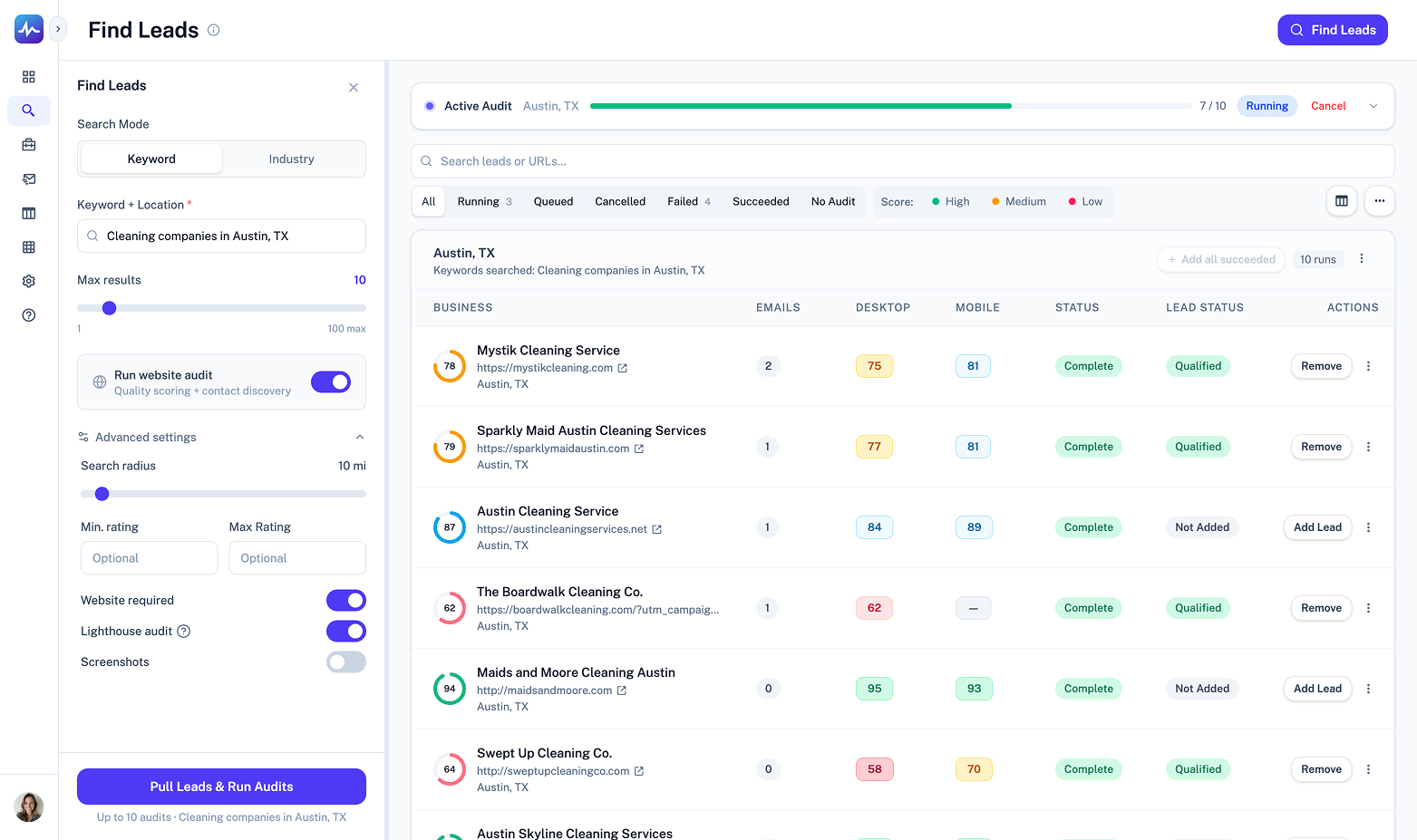
Pulse discovers local businesses by location and category, then turns raw business data into a ranked list of opportunities.
The Approach
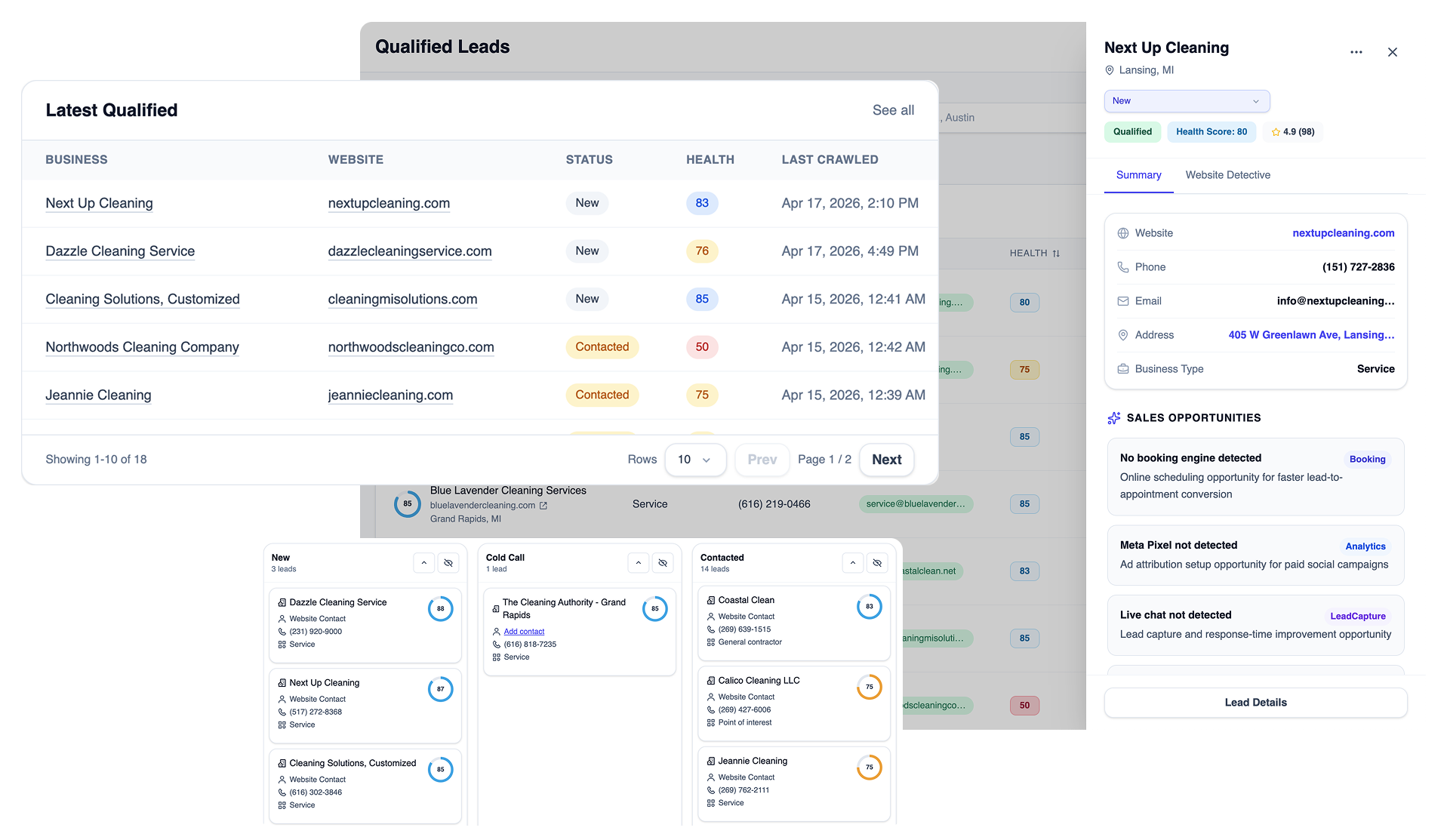
I designed Pulse around one guided workflow: find local leads, analyze their website and digital presence, qualify them with a health score, generate first-contact outreach, and track each lead through a simple pipeline.
Figma Make helped me get from idea to coded prototype quickly. ChatGPT helped me explore product flows, edge cases, data modeling, and copy. Codex became the build partner for turning prototypes into working application code, tightening components, and pushing the product toward something real.
I kept the product intentionally lightweight. Pulse is not trying to be a full CRM. It is built for the specific moment when someone needs to find good local businesses, understand why they are worth contacting, and reach out with context instead of cold guesswork.
Role: Product, Design, Engineering •Focus: Lead scoring + AI workflows
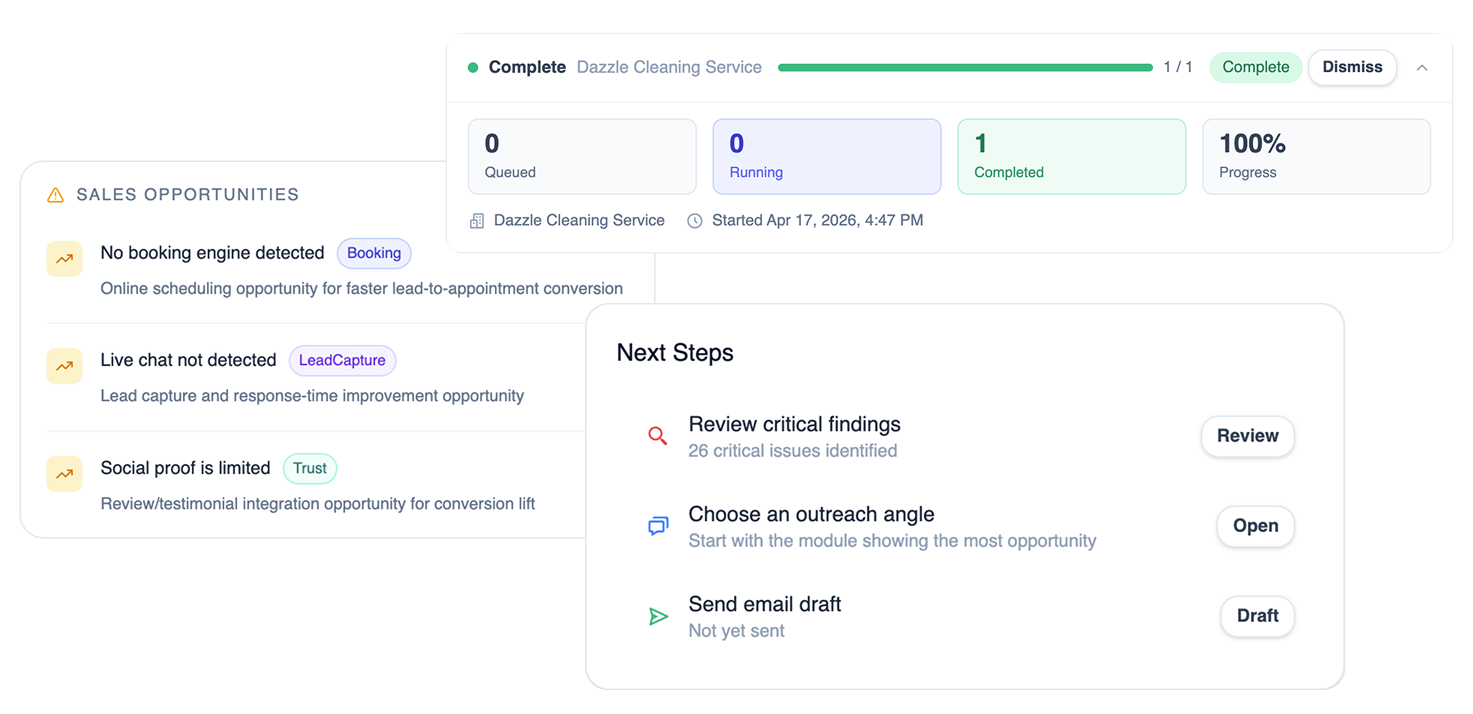
Website intelligence flags signals like missing websites, weak digital presence, review gaps, performance issues, and other opportunities that can support better outreach.
Building with AI
This project is a clear example of how I work with AI as a product multiplier. I was able to move from concept to prototype to working micro-SaaS by combining product judgment with AI-assisted design and engineering.
The important part was not just generating screens or code. It was knowing what to ask for, how to evaluate the output, where to simplify, and when to step in with my own product and design decisions.
Role: Solo Builder •Output: Micro-SaaS completed in 2026
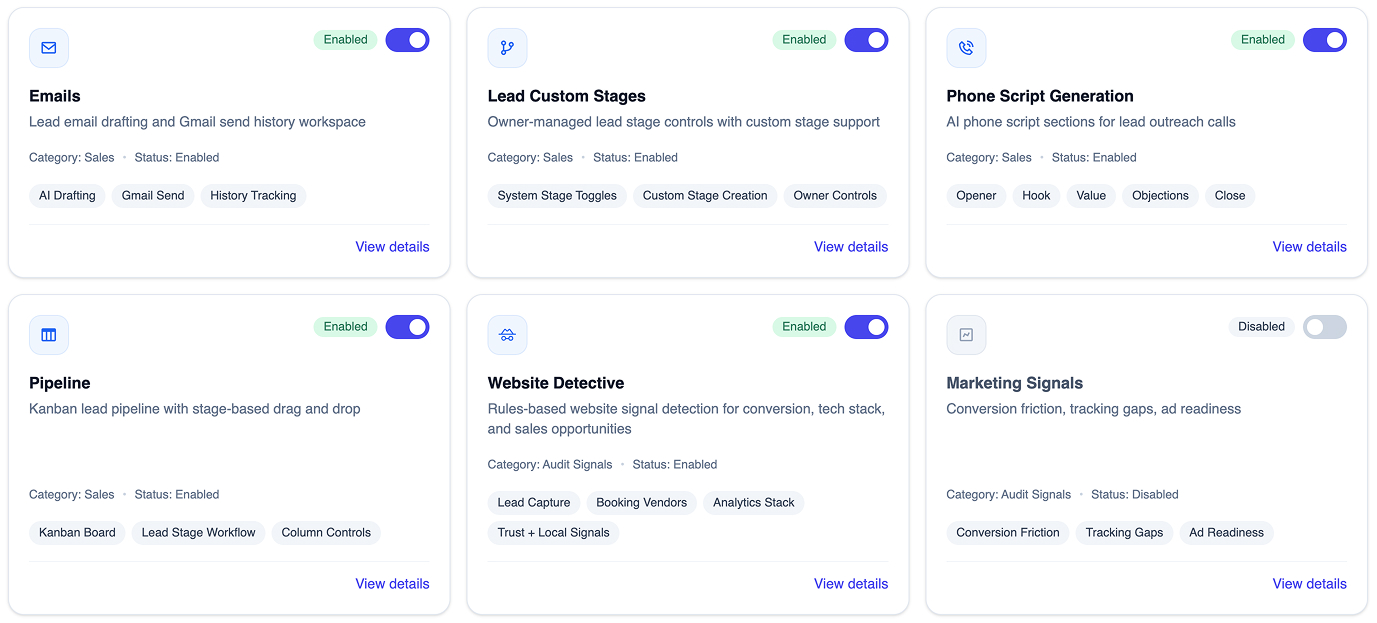
The final workflow includes AI-generated outreach drafts, call scripts, notes, statuses, and a lightweight pipeline for moving leads from new to closed.
The Impact
Pulse gave me a complete end-to-end product to build and shape on my own. I handled the idea, positioning, product flows, interface design, frontend implementation, backend logic, AI-assisted features, and launch site.
More importantly, it reflects the way I think modern product work is changing. AI helped me move faster, but the product still required judgment: what to build, what to leave out, how the workflow should feel, and how to make the system useful for real people trying to win local business.